
Quick Answer
The easiest way to record family stories: Use your smartphone's voice recorder app in a quiet room, start with easy warmup questions, and keep sessions to 30-45 minutes. Back up recordings immediately to cloud storage and share with family while memories are fresh.
A survey of 6,000+ Americans found that 47% regret not recording their loved ones' voices before they passed. Most families don't start until a life event forces the question: illness, retirement, a health scare. The window is narrower than most expect.¹
This guide covers the setup, the flow of the conversation, and the follow-up steps so the memories stay safe and shareable.
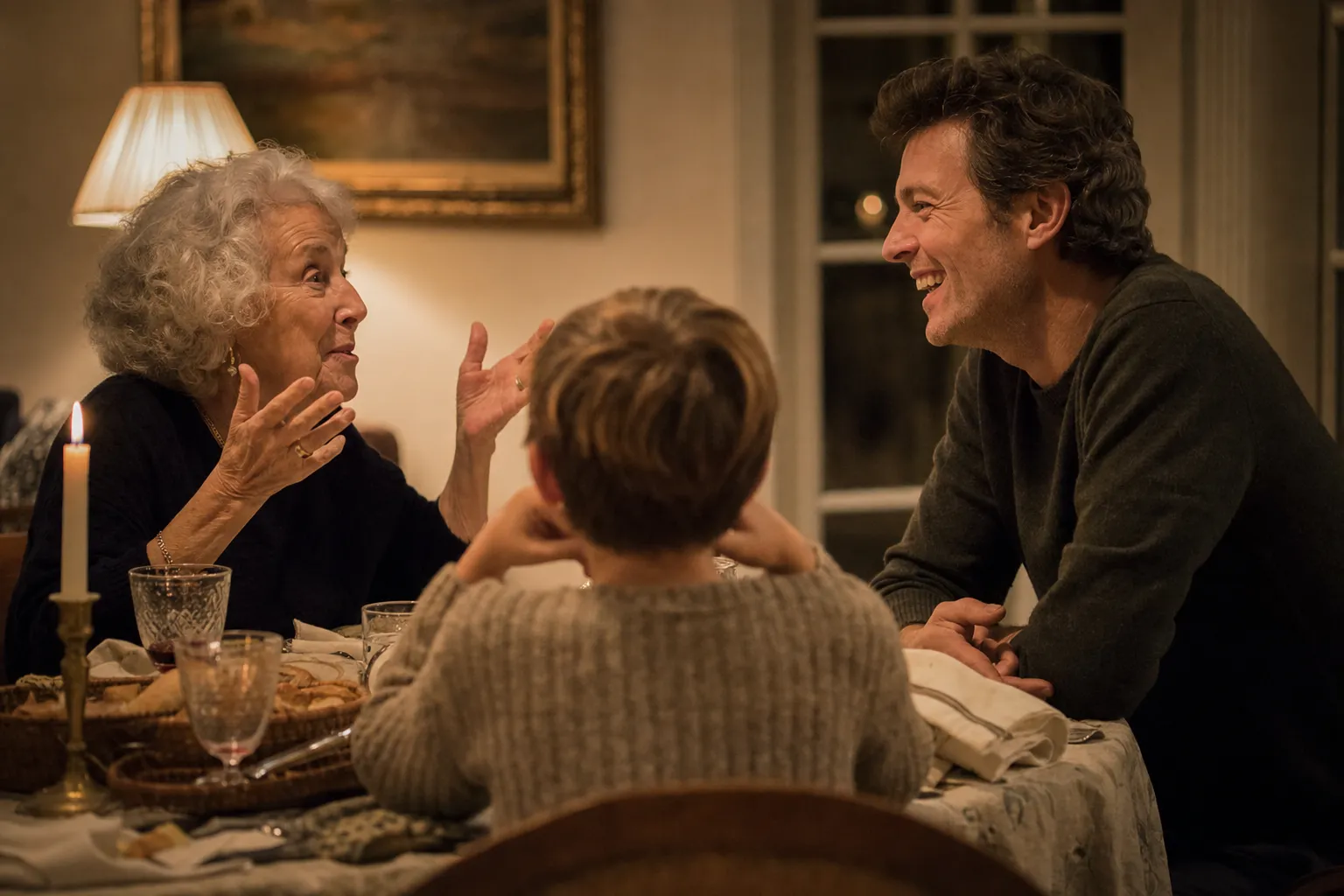
Recording family stories can be as simple as using your phone and asking the right questions.
Before You Start
Choose the Right Moment
The best recordings happen when your loved one is relaxed and alert. Mid-morning often works well for seniors, after breakfast but before fatigue sets in. Research from the Journals of Gerontology and Baycrest's Rotman Research Institute confirms that older adults perform best on cognitive and memory tasks in the morning, making mid-morning the optimal window for story recall.² Avoid times right after medical appointments or when they might be distracted.
Set Up Your Space
Find a quiet room with comfortable seating. Turn off televisions, silence phones, and close windows if there's traffic noise. Good recordings need minimal background noise; kitchens are often louder than they seem.
Simple Gear Checklist
- A phone (iPhone Voice Memos or Android Recorder)
- Optional: wired earbuds or a cheap lav mic for cleaner audio
- A quiet room and two comfortable chairs
- A backup destination (iCloud, Google Drive, Dropbox)
If time is limited due to a parent's declining health, see Recording a Dying Parent's Stories for guidance tailored to that situation. For an emergency checklist, start with Urgent Story Preservation.
Test Your Recording
Do a quick test recording and play it back. Can you hear clearly? Is the room echoing? Adjust as needed. Discovering bad audio after a heartfelt conversation is an easily avoidable mistake.
Let the recording do the remembering
You bring the questions. Heritage Whisper handles the rest: it records the conversation, transcribes every answer, and shares it with your whole family automatically.
During the Recording
Start with Easy Questions
Don't jump straight into heavy topics. Begin with comfortable questions:
- "Tell me about the house you grew up in."
- "What did you do for fun as a kid?"
- "What was your favorite meal your mother made?"
These warmup questions help your loved one relax before moving into harder topics.
Ask Follow-Up Questions
The best stories come from follow-up questions. When they mention something interesting, dig deeper:
- "You mentioned your father's workshop. What did it smell like?"
- "How did that make you feel?"
- "What happened next?"
Embrace the Silence
Don't rush to fill pauses. Sometimes the best stories come after a moment of reflection. Count to five in your head before jumping in with another question.
Keep Sessions Short
Thirty to forty-five minutes is ideal. In our experience building Heritage Whisper with my retired father, story quality declines noticeably after 45 minutes due to cognitive fatigue. StoryCorps, which has recorded 645,000+ participants since 2003, uses 40-minute sessions for the same reason.³ It's better to have multiple short sessions than one exhausting marathon. You can always schedule another conversation.
After the Recording
Back Up Everything
Immediately copy your recordings to a second location, cloud storage, another device, or a family member's computer. Backblaze's hard drive data shows an average 1.4% annual drive failure rate, and that's enterprise hardware. Consumer devices fail more often, and phones get lost or broken.⁴ Recordings this irreplaceable need at least two copies.
Add Context Notes
While the conversation is fresh, jot down notes about who was mentioned, locations discussed, and approximate dates. These details fade quickly; notes written the same day are far more useful than trying to recall them a week later.
Share with Family
Send recordings to siblings, cousins, and children. Share them now, while everyone involved can still hear the reactions.
Common Challenges
"I don't have any stories"
Need prompts? Start with our questions to ask grandparents.
Everyone has stories; some people just need the right question. Research on the cognitive interview technique shows that structured, specific prompts improve recall by 25-40% in older adults versus open-ended questions.⁵ "Tell me about your wedding day" draws out far more than "Tell me about your life." Ask about specific events: their wedding day, their first job, the day you were born.
Technical Issues
Keep it simple. A smartphone recording app works fine. Don't let gear anxiety delay the recording; a slightly imperfect audio file of a real conversation is worth more than waiting for perfect conditions.
Emotional Moments
Some stories bring tears. Have tissues nearby and let the moment settle. Don't rush past it.
Related guides
- Questions to ask grandparents
- Recording your parent's stories
- Urgent story preservation
- Family legacy preservation guide
Ready to Start?
You have the setup, the questions, and the follow-up steps. Press record and start. Heritage Whisper handles transcription, backup, and family sharing automatically, so the technology stays out of the way.
Pick one question from this guide and use it at your next gathering, car ride, or phone call. One question is all it takes to start.
Press record on your family's stories
Sources:
- Memorial Merits Survey — "47% Regret Not Recording Their Parents' Voice," survey of 6,000+ Americans
- Journals of Gerontology, Series B — "Effects of Time of Day on Age Differences in Working Memory"; Baycrest/Rotman Research Institute — "Older adults have morning brains," 2014
- StoryCorps — 645,000+ participants since 2003, archived at the Library of Congress
- Backblaze Hard Drive Stats, 2025 — Annual failure rate data across 340,000+ drives
- Cognitive Interview Research — "The Cognitive Interview enhances long-term free recall of older adults," Psychology and Aging, 2006
- Ebbinghaus Forgetting Curve — memory fades ~50% within an hour without reinforcement; recordings preserve stories that conversation alone does not
Take the questions with you
Get the free 50-question guide families use to spark story conversations. We'll send it to your email.
Frequently Asked Questions
What is the best way to record family stories?
Use your smartphone's voice recorder in a quiet room, start with easy warmup questions about childhood, keep sessions to 30-45 minutes, and back up recordings to cloud storage immediately. For the easiest approach, use a dedicated platform like Heritage Whisper that handles recording, transcription, and family sharing in one tap.
How long should a family story recording session be?
Aim for 30-45 minutes for healthy adults. For seniors with health concerns, keep sessions to 10-20 minutes. Research shows cognitive clarity and memory recall decline after about 45 minutes, so shorter focused sessions produce better stories than marathon recordings.
What equipment do I need to record family stories?
A smartphone is all you need. Modern phones have excellent microphones. Place the phone 12-18 inches from the speaker on a stable surface. For better quality, use a quiet room with soft furnishings to reduce echo. No special equipment or apps are required to start.
How do I get a reluctant family member to share stories?
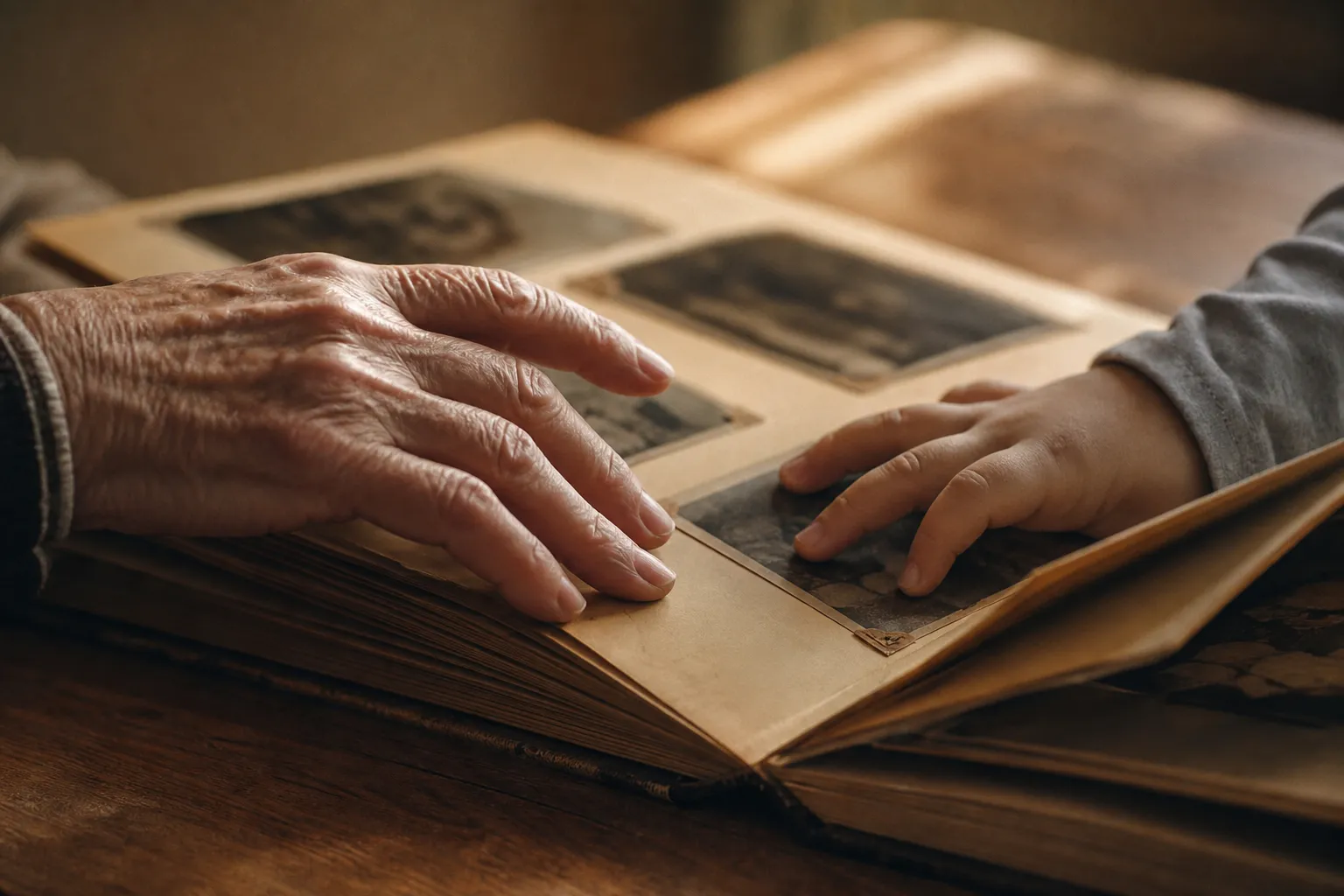
Start with easy, non-threatening questions like 'What was your favorite meal growing up?' or 'Tell me about your first pet.' Avoid framing it as an interview — make it a conversation. Looking at old photos together is one of the best ways to naturally prompt storytelling.