
100+ Questions to Ask Your Grandpa Before It's Too Late
100+ meaningful questions to ask your grandpa about his childhood, his own father, his first job and first car, military service, falling in love, and the man he was before he was Grandpa. Specific, concrete prompts designed for the questions grandfathers actually answer.
These are questions to ask your grandpa when you want to capture his whole story — not just the patriarch role, but the man he has been his whole life.
Quick Answer
Best questions to ask your grandpa: Start concrete — his first car, first job, his own father. Move into teen years, military service or early career, how he met your grandmother, his work life, and becoming a father. Use specific event-based prompts over open-ended ones — research shows 25-40% better recall with structured questions, without increasing memory errors.¹
Critical timing: 47% of Americans regret not recording their loved ones' voices.² Many grandfathers carry stories they have never told — about their own fathers, about service, about hard years — and they often won't volunteer until someone specifically asks. Your job is to ask.
| Time you have | What to ask |
|---|---|
| 5 minutes | "What was your first car?" or "What was your dad like?" |
| 30 minutes | First-job/first-car question, one about his own father, one about the day he met Grandma or your parent was born |
| A weekend | Childhood → his dad → teen years → military or first jobs → meeting Grandma → becoming a father → career |
| An ongoing project | All 100+ questions below, in 30-45 minute sessions, recorded over months |
Concrete questions first. The harder ones surface on their own once trust is built.
Capture his voice, not just his answers
The words matter. So does the way he says them: the pause before an old memory, the laugh in the middle of a story. Heritage Whisper records the conversation, transcribes every answer for you, and saves it in a timeline your whole family can open from anywhere.
Before You Begin: How to Use This List
Quick answer: Most grandfathers won't volunteer their stories. They'll answer specific questions in detail, but "tell me about your life" usually gets a shrug. This list is built around the concrete prompts grandfathers actually answer.
This list is organized from easiest (childhood, first car, first job) to hardest (regret, faith, what he's never said). Most grandfathers talk most freely about what they did than how they felt — but if you ask the concrete questions first, the feelings come out on their own.
If your grandpa is in his 80s or 90s, run 30-45 minute sessions rather than one long interview. Families who record stories in shorter, recurring sessions capture significantly more content than those attempting marathons.³

His Childhood
Quick answer: Childhood questions are the safest warm-ups. Specific places and objects work better than abstract prompts.
- What's your earliest memory?
- What was your childhood home like? Can you walk me through it?
- What did you do for fun as a kid?
- Who was your best friend growing up?
- What chores were you responsible for?
- Did you have any pets? Tell me about them.
- What was school like for you? What were your grades like?
- What did you get in trouble for the most?
- What was your favorite meal as a kid?
- What did your family do on Sundays?
- What smell or sound takes you back to childhood?
- What did you want to be when you grew up?
- What was the best gift you got as a kid?
- What was the worst trouble you ever got into?
- Did you have any nicknames?
His Father (Your Great-Grandfather)
Quick answer: Questions about your grandpa's own father are some of the most overlooked — and the most revealing. They show where your grandpa learned to be a father, and what he chose to keep or change.
Why this matters: Research shows that children who know their family history have higher self-esteem and better resilience during stress.⁴ The father-to-father story is often where that thread starts — and where the silences in a family begin.
- What was your dad like?
- What did your father do for work? Tell me about a typical day for him.
- What did he teach you that you still carry?
- What's a memory of him that always makes you smile?
- Was your father affectionate? Did he tell you he loved you?
- What's something he did that you swore you'd never do as a parent?
- What did you find yourself doing later that was just like him?
- Were you closer to your mom or your dad? Why?
- What did your father expect of his sons specifically?
- What did he and you argue about most?
- Did he live to meet your kids? If yes — what did that look like?
His Mother and Family
Quick answer: Don't skip the mother questions. The mother-son relationship in your grandpa's life shaped how he loved everyone after.
- What was your mother like?
- What did she do day to day?
- What did she cook that you still miss?
- How did your parents treat each other? What did you learn from watching them?
- Did you have brothers and sisters? Tell me about them.
- Where did you fall in the order? Who were you closest to?
- What was your role in the family — the responsible one, the troublemaker, the dreamer?
- What was the funniest thing your siblings ever did?
- Where did your family come from before us? Tell me what you know about the immigration, the move, the country your name came from.
His Teen Years
Quick answer: Teen years are where many grandfathers actually loosen up — first jobs, first cars, first dances, first fights are all easy specific questions.
- What was high school like for you?
- Did you play sports? What were you good at?
- What was your first job? How much did it pay?
- How did you spend your first paycheck?
- What was your first car? Tell me everything about it — color, make, what it cost, what broke first.
- What was the fashion when you were a teenager?
- What music did you listen to?
- Did you go to dances? What was that like?
- Who was your first crush?
- What did you and your friends do on Friday nights?
- Did you get into fights? What about?
- What did you imagine your life looking like at 25?
Military Service or What He Did in His 20s
Quick answer: If he served, this is a major story arc most families never ask about properly. Even if he didn't, ask what he did in his 20s — those years often carry stories nobody asks about.
If your grandpa served, ask the warmups gently and follow his lead. For a deeper veteran-specific list with Memorial Day questions and era-specific guidance, see our questions to ask a veteran guide.
- Did you enlist or were you drafted?
- How old were you when you went in?
- Why did you choose the branch you did?
- Where did you do basic training? What was that like?
- What was your job, MOS, or rate? What did that actually mean day to day?
- What was your unit, ship, or station?
- Where were you stationed? Where else did you go?
- Who was your best friend in the service? Tell me about him.
- What was the food like? What did you eat?
- What did you carry with you that wasn't gear — a photo, a letter, a token?
- What's the funniest thing that happened in your service?
- Did you ever have to deal with something hard? Are you willing to tell me about it?
- What was the day you came home like?
- What did people get wrong about how to welcome you back?
If he didn't serve, ask:
- What were you doing in your 20s?
- What was your first real job?
- Where did you live? What was that place like?
- Who were your best friends back then?
- What did you do for fun before you were married with kids?
How He Met Your Grandmother
Quick answer: The meet-cute story is one most families think they know, but the longer version is almost always full of detail nobody has heard.
- How did you meet Grandma?
- What was your first impression of her? Did you like her right away?
- What was your first date?
- When did you know she was the one?
- Did her parents like you? What about your parents and her?
- How did you propose? Where? What did you say?
- Did you ever almost not marry her? What changed?
- What's a story about her from before she was a grandmother that her grandkids don't know?
His Wedding and Early Marriage
Quick answer: Wedding day questions are detail-rich because the day is so specific. Ask anyway — even quick answers are precious recordings.
- Where did you get married? Who came?
- What did you wear?
- What did the reception look like? What music played?
- What song was your first dance?
- What did you and Grandma do that night, and the next morning?
- What was your first home together like?
- What did you fight about the first year?
- What did you learn about marriage that nobody told you?
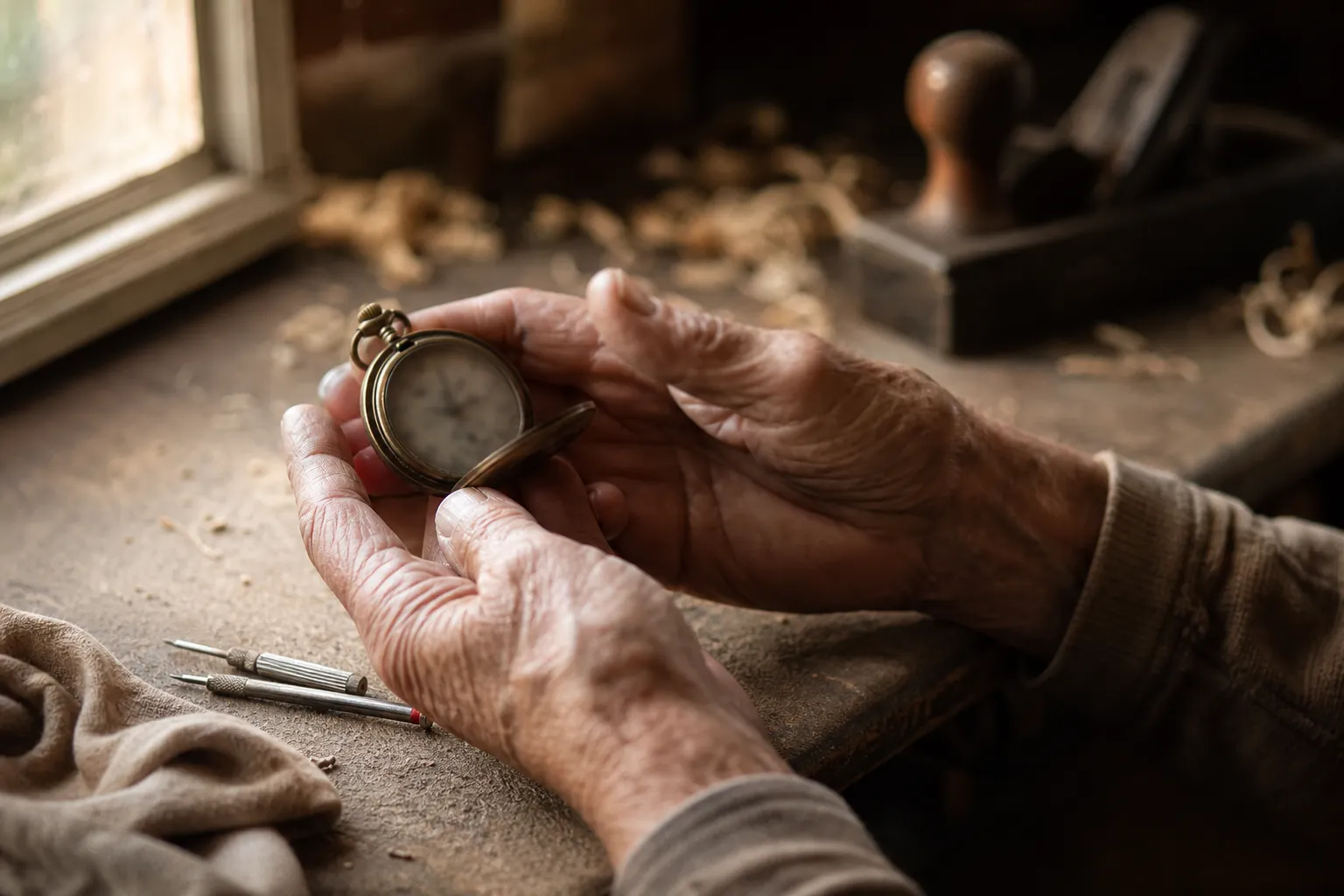
His Career and Work Life
Quick answer: Many grandfathers carry their work as core identity. Ask about specific jobs, specific bosses, specific tools — those are the doors.
- What jobs did you have over the years?
- What was your favorite job? Your least favorite?
- What boss had the biggest impact on you?
- Was there a mentor who taught you something you still use?
- What was the hardest you ever worked?
- What's a tool, machine, or piece of equipment you still know inside and out?
- What's a skill you learned that helped you in every job after?
- What did your work teach you about people?
- What are you most proud of professionally?
- What would you have done differently in your career?
- Did you ever have to support the family through a hard stretch? What did that look like?
- When did you retire? What did the last day at work feel like?
Becoming a Father
Quick answer: Most adult children have never asked their father what their birth was like for him. Most grandfathers have never been asked about it twice. Ask.
- Tell me about the day [my parent / your first child] was born.
- Were you in the room? Were fathers allowed to be back then?
- What was the first night home like?
- Were you ready to be a dad? Did anyone help you?
- What did you and Grandma argue about as new parents?
- What's something you got wrong as a father that you wish you could tell them now?
- What's something you're proud of as a father that nobody knows?
- What did fatherhood teach you about your own dad?
Watching His Kids Become Parents
Quick answer: This is a thoughtful question grandfathers often answer better than expected. They've had decades to think about it.
- What was it like watching your kids become parents?
- What did you bite your tongue about?
- What did they do better than you did?
- What's something modern parenting gets right?
- What's something you think modern parenting overcomplicates?
- What's a moment you saw your son or daughter as a parent and felt proud beyond words?
- What's the hardest part of being a grandfather that nobody warns you about?
His Tools, Hobbies, and the Things He Built
Quick answer: Many grandfathers have a vocabulary of tools, machines, gardens, sports, or trades. Asking him to walk you through one of those is a stealth way to get hours of stories.
- What's a tool you've used your whole life? Tell me about it.
- What did you build with your own hands?
- What's a project you're most proud of?
- What hobby has lasted you the longest? When did it start?
- Are you a gardener, a fisherman, a hunter, a fixer, a builder? Walk me through what you actually do.
- What's something you taught yourself how to do?
- What's something you wish more young people knew how to do?
Faith, Values, and What He Believes
Quick answer: Faith and belief questions can unlock the wisdom your grandpa is most quotable on. Ask, even if you think you know the answer.
- What role did faith or religion play in your life?
- Did your beliefs change as you got older?
- What does prayer or quiet time mean to you?
- What do you believe happens after we die?
- What do you believe makes a good life?
- What do you wish more people understood about your generation's values?
His Reflections and Regrets
Quick answer: Save these for later in the project, after he's relaxed. They're often the most thoughtful — and the most worth recording.
- What's the best advice you ever got?
- What advice would you give a young man today?
- What's a regret you've made peace with?
- What's a regret you still carry?
- What's a moment you'd live over again exactly as it happened?
- If you could go back and tell your 25-year-old self something, what would it be?
- What did you worry about for years that turned out to be nothing?
- What did you not worry enough about?
- What's something you believe now that you didn't believe at 30?
What He Wants You to Know
Quick answer: These are the legacy questions. They tend to be the recordings family replay most after he's gone.
- What do you want me to remember about you?
- What do you want my kids (your great-grandkids) to know?
- What's something you've never told me that you want me to know?
- What do you hope our family never forgets?
- What do you hope our family lets go of?
- Is there anyone you'd want me to talk to or thank for you?
- What do you want your legacy to be?
Just for Fun
Quick answer: Light questions are perfect for cool-downs after deeper sections, or for short conversations when energy is low.
- What's the best meal you've ever had?
- What's your favorite movie?
- Where's the best place you've ever traveled?
- What's the funniest thing that's ever happened to you?
- If you could have dinner with anyone in history, who would it be?
- What's the dumbest thing you ever spent money on that you don't regret?
The Father's Day or Birthday Conversation: A 30-Minute Starter Set
Quick answer: If you only have one window — Father's Day, his birthday, a holiday — ask these three in order. They're the fastest path to a recording your family will keep.
- "Tell me about your first car." — easy warmup, almost always a story
- "What was your dad like? What did he teach you that you still carry?" — opens the generational thread
- "What was the day [my parent / your first child] was born like for you?" — almost always emotional, almost always the recording grandkids will replay
Hit record before question one. Phone audio is fine. Polish doesn't matter; presence does.
Tips for Asking These Questions
Quick answer: Concrete first, follow the tangents, record everything, never push, ask about objects.
Start concrete. First-car, first-job, his dad's tools — these are the anchors that unlock stories.
Follow the tangents. The most meaningful family stories often emerge from unplanned tangents, not scripted questions.⁵
Record everything. Memory fades roughly 50% within an hour without review.⁶
Make it regular. Three 45-minute sessions will get you more than one three-hour interview.
Ask follow-ups about objects. When he mentions a car, a tool, a place, ask, "What did it look like?" Specific objects unlock the surrounding memory.
Don't push when he goes quiet. That pause often comes right before the most important sentence of the day.
Related Guides
- The best gift for grandparents (year-round)
- The best Father's Day gift for dad
- 100+ Questions to Ask Your Grandma
- 100+ Questions to Ask Your Mom
- 100+ Questions to Ask Your Dad
- 100+ Questions to Ask Your Grandparents
- 100+ Questions to Ask Your Uncle
- 100+ Questions to ask a veteran about their service
- Recording your grandparents' stories
- Questions to ask your parents before they die
- The complete family legacy preservation guide
You have the questions. Now you need 30 minutes and a phone. Heritage Whisper turns the recording into a transcribed, organized archive your family can listen to forever. Your grandkids will be able to hear your grandpa's voice answering these questions long after the conversation is over.
Keep your grandpa's voice forever
Sources:
- Cognitive Interview Research — "The Cognitive Interview enhances long-term free recall of older adults," Psychology and Aging, 2006
- Memorial Merits Survey — 47% of Americans regret not recording loved ones' voices
- StoryCorps — 645,000+ participants since 2003, with sessions averaging 40 minutes
- Emory University "Do You Know?" Study — Dr. Marshall Duke & Dr. Robyn Fivush: family history knowledge is the best single predictor of children's emotional health
- Frontiers in Psychology — "The role of intergenerational family stories in mental health and wellbeing," 2022
- Ebbinghaus Forgetting Curve — established psychology: memory fades approximately 50% within an hour without review
Take the questions with you
Get the free 50-question guide families use to spark story conversations. We'll send it to your email.
Frequently Asked Questions
What are the best questions to ask your grandpa?
Start with concrete, specific questions — his first car, first job, his own father — rather than open-ended ones. Most grandfathers don't volunteer stories the way grandmothers do, but they answer specific questions in detail. Move into his teen years, military or early-career service, how he met your grandmother, his work life, and becoming a father. Save reflection and regret questions for late in the project, after he's relaxed.
How do I get my grandpa to open up?
Ask about objects and events, not feelings. 'Tell me about your first car' or 'what was your first job' or 'what kind of work did your dad do' will get you stories. 'How did you feel about that' will usually get you a shrug. Specific concrete prompts unlock memory and feelings together — the feelings come out inside the story, not in answer to a direct question. Let them.
What questions should I ask my grandpa about his military service?
Start with how he ended up in the service (drafted, enlisted, family expectation) and what basic training was like — those are the safest universal warmups. Move into his unit, his job or MOS, where he was stationed, and the people he served with. Save combat, losses, and coming-home questions for later. For deeper guidance, see our questions to ask a veteran guide. Don't assume combat — most veterans never saw combat, and the assumption can feel dismissive of what they actually did.
What should I ask my grandpa before he dies?
Prioritize four areas: his own father (your great-grandfather), his version of how he met your grandmother, the day his first child (or your parent) was born, and a question many men want to be asked but rarely are: 'What's something you've never told me that you want me to know?' Even a 20-minute recording on these areas creates irreplaceable family history. Don't wait.