Quick answer
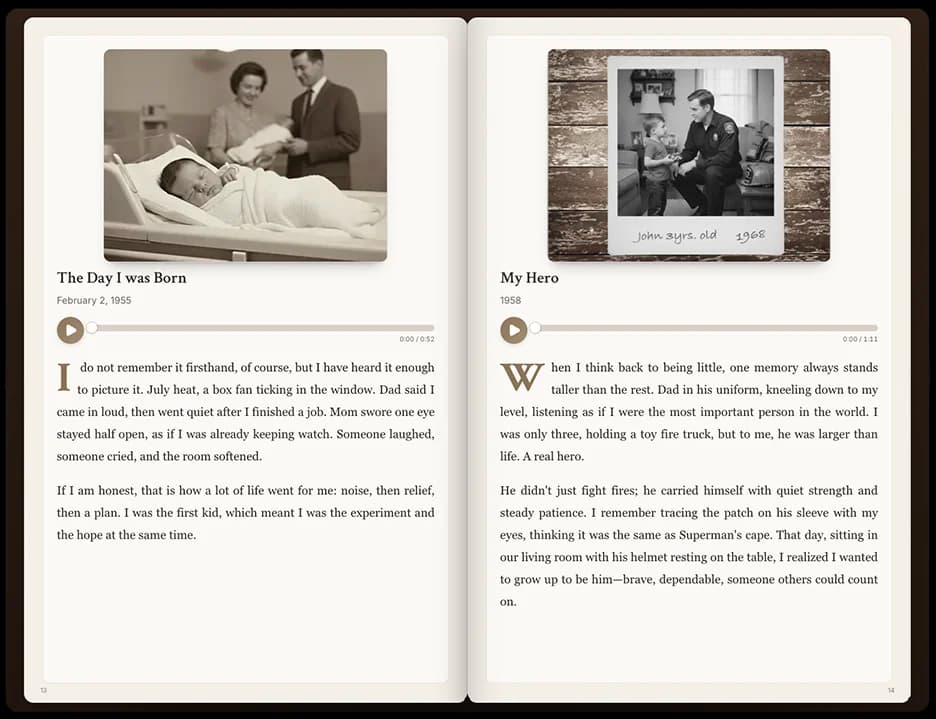
A useful memoir prompt brings you back to a particular scene: a room, a person, a decision or an ordinary day. Choose one, describe what happened in your own words, then add what it means to you now. You can write your answer or say it aloud.
How to use these memoir prompts
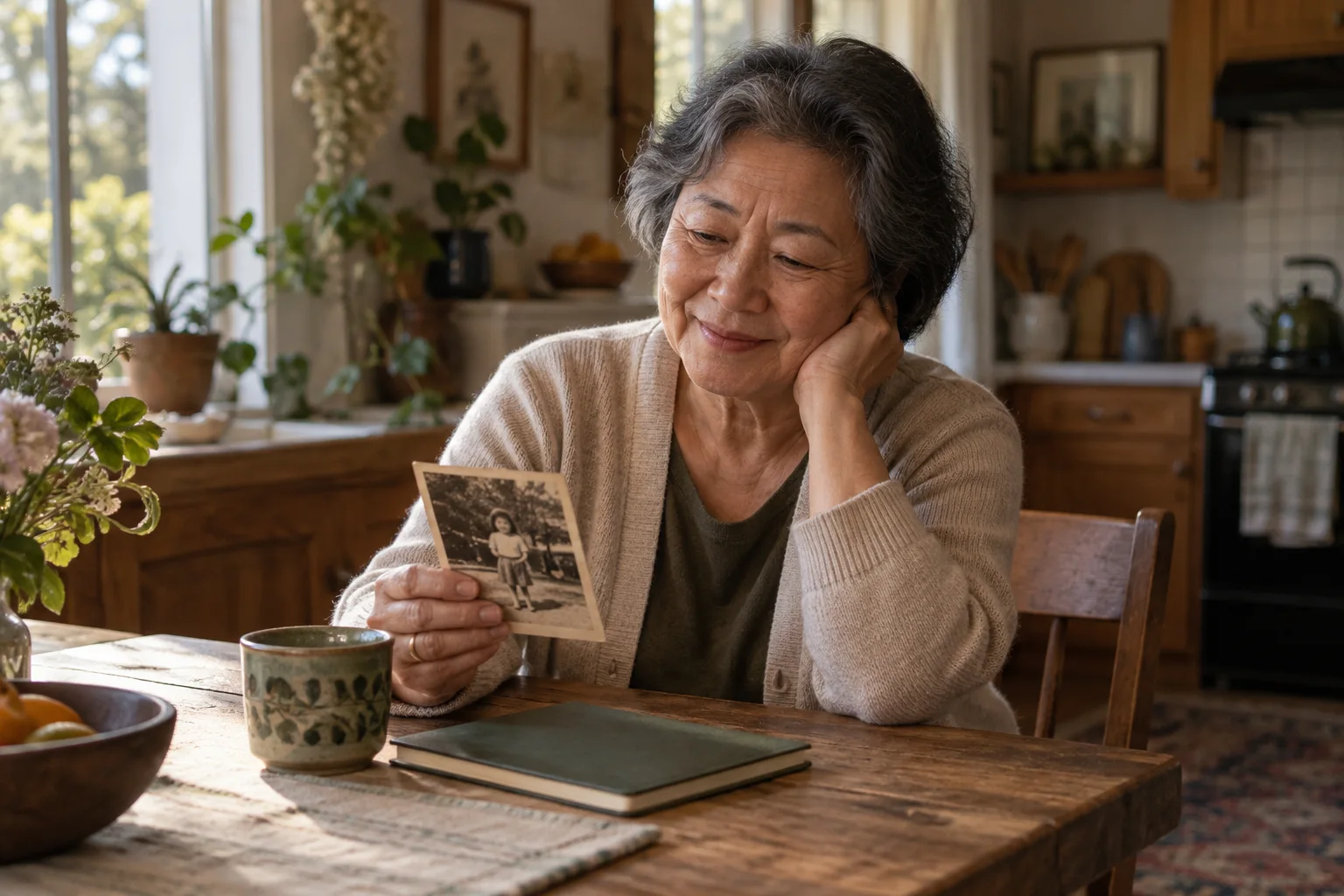
Pick a question that makes you remember a particular moment. Give yourself a little uninterrupted time and write or speak without correcting every sentence. You are gathering material, not submitting a finished book.
If a broad question leaves you staring at the page, make it smaller. Instead of describing your whole childhood, describe one breakfast. What was on the table? Who was already awake? What did you hear from the next room? Specific details give a reader somewhere to stand.
The prompts below are original starting points for personal reflection. Save the ones you like with the + button. Your selected questions appear in the kit near the bottom of this page; the separate worksheet above helps you develop one answer.
Childhood places
Start with a place you knew well. A doorway, a back step or a familiar walk can be easier to describe than an entire year.
The people who shaped you
Let a person appear through something they did or said. You do not have to summarize their whole character.
First steps into your own life
First attempts often include the useful, imperfect details that a polished summary leaves out.
Love and everyday belonging
A relationship can live in a small habit: a cup left out, an evening walk or a familiar greeting.
Turning points and second chances
Only write about experiences you want to explore. A difficult chapter does not need to be included for your memoir to matter.
What you want to carry forward
Finish with something you want a future reader to understand about the life behind the stories.
A prompt becoming a scene
Prompt: What did you buy with money you earned yourself?
A first answer: “I bought my mother a radio.”
A more developed scene: “I kept the wages from three Saturdays in an envelope under my socks. At the shop, I chose the smallest radio because it would fit beside the flour tin. Mum switched it on before she took off her apron. For the rest of that winter, the kitchen had music.”
This is an original fictional example, not a customer story. Its useful pieces are the concrete object, the action and the setting. Your version does not need to sound like this. Use words you would actually say, and do not invent a detail simply because it would make the scene prettier.
Shape an answer into a chapter
First, collect the scene. Then ask what changed, what surprised you or why you still remember it. Those reflections can become a closing paragraph. Give the piece a working title, such as “The kitchen radio,” so you can find it again.
On a later pass, check names and dates. If you cannot remember the exact words someone used, describe the conversation without presenting invented dialogue as a quotation. Keep uncertainty visible: “I think it was the summer before we moved” is more useful than false precision.
If the story includes another person's private experience, consider what they would be comfortable having shared. A family copy and a public memoir can have different boundaries.
For an interview with someone else, use our family history interview guide. For a shorter message about your values and hopes, try a legacy letter.
Further reading
The Oral History Association's principles are a useful starting point when your memoir project includes recorded interviews with other people. Our recording guide covers the practical steps for capturing and saving a conversation.
Frequently Asked Questions
How do I start a memoir if I do not know what to write?
Choose one small scene you remember: a kitchen, a first job or a conversation. Describe where you were, who was there and what happened. Add what you understand about it now. You can decide where it belongs in a longer memoir later.
Can I speak my memoir instead of writing it?
Yes. Record a memory in your own words, then use the recording as the starting point for a written story. Review names, dates and wording afterward, and keep the original audio alongside the edited version.
Do memoir prompts need to be answered in order?
No. Begin with a prompt that brings a specific memory to mind. You can collect separate scenes and arrange them by time or theme later. Skip any prompt you do not want to answer.