Quick answer
Begin a family history interview with the storyteller’s name, the date and permission to record. Ask about relatives, childhood homes, work, moves and traditions. Follow specific memories with names and places; mark uncertain dates as approximate and check documents afterward.
Before the first question
Tell your relative why you want to hear their story and who you hope will hear the recording. Ask permission before recording, and agree that they can skip a topic, pause or stop. The Oral History Association emphasizes respect for the narrator and an ongoing, collaborative relationship.
Choose a quiet, comfortable place. Record a brief test and play it back. At the start of the real recording, say the date, the storyteller's name and your name. If they use a nickname, note that too. Your future family historian will appreciate the context.
For a first session, choose a handful of questions instead of trying to finish the whole collection. These are original prompts for family use, not an official archival questionnaire. The free worksheet keeps practical details together; the + buttons let you assemble your own question list.
Names and the people behind them
A spelling, nickname or relationship can unlock another branch of the family story. Ask for clarification without turning the conversation into a test.
Homes and everyday life
Ordinary routines tell future generations things that certificates rarely record.
Work, learning and making ends meet
Let people describe work in their own terms. A job title alone seldom explains what their days were like.
Moves and new beginnings
Do not assume every move was chosen or easy to discuss. Ask which parts of the journey they want to tell.
Traditions, recipes and celebrations
Ask for a particular occasion. The story of one holiday can be more vivid than a list of traditions.
Photographs, keepsakes and missing pieces
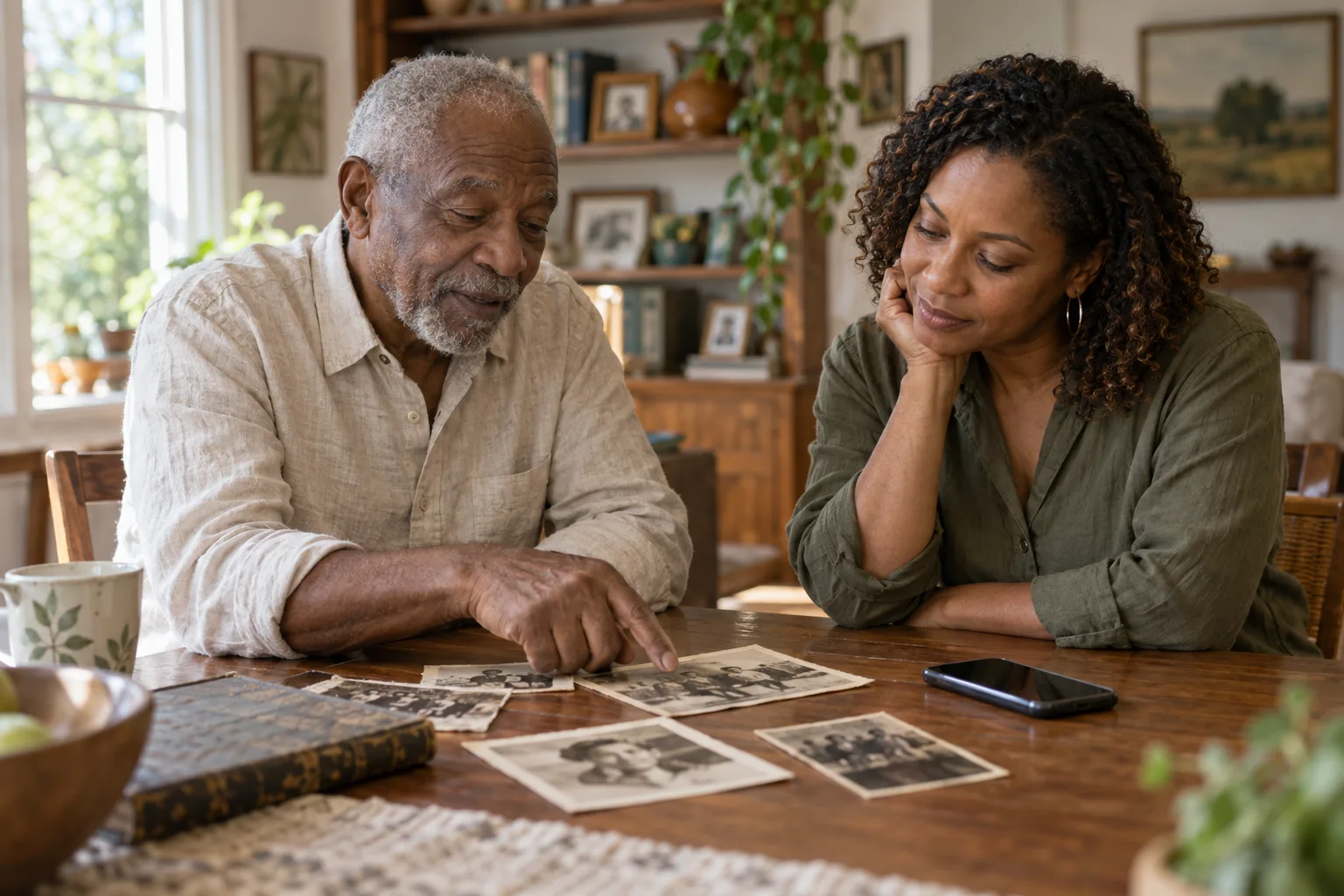
Put one object or photograph between you. Keep its description with the recording so a later listener knows what you were looking at.
Follow the story, then collect the details
Let an answer finish before asking for spellings or dates. A simple follow-up such as “What happened next?” can keep the story moving. Afterward, ask “Which town was that?” or “Was that before or after you started school?”
Use the worksheet's “check later” area for uncertainty. For example: “Aunt Jo, possibly Josephine; worked at the mill; around 1958; ask about town.” That is a research lead, not a verified fact.
If two relatives remember an event differently, retain both accounts with their names attached. A useful record can say “Evelyn remembers spring; David remembers autumn.” Do not quietly smooth away the disagreement.
Turn the recording into a usable family record
Name the file with the date and storyteller, then add a short description of its subjects. Keep a separate backup and check that you can open it. Write down where any photographs or documents are stored.
Before sharing, confirm the intended audience and any parts the storyteller wants kept private. Give them a chance to correct names or clarify an answer. If you produce an edited story, retain the original recording so the family can hear the account in its original context.
For a parent-specific collection, explore questions for Mom or questions for Dad. For sound and setup help, use how to record family stories.
Sources and next steps
Read the Oral History Association's principles and best practices for the broader ethical framework. A military service interview has additional context; our veteran guide offers a respectful starting point and links to the Library of Congress.
Frequently Asked Questions
What should I ask in a family history interview?
Ask about relatives and their names, childhood homes, work, moves, traditions and everyday life. Follow a story with questions about who was there, where it happened and roughly when. Keep uncertain details marked for later checking.
How do I interview a relative who says they have no stories?
Offer a specific, ordinary starting point, such as a photograph, a family recipe or the walk to school. Ask what they remember about that one thing. Let them choose another subject or stop if they prefer.
What if two relatives remember an event differently?
Keep both accounts attributed to their tellers. Mark dates or details as uncertain and check records where possible. Do not silently combine different recollections into one apparently certain version.